


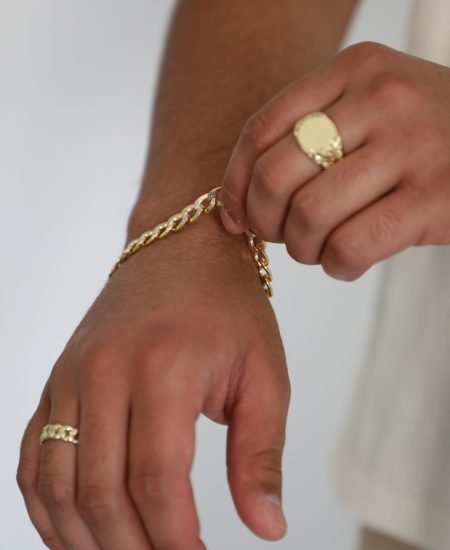
You didn’t cop that chain to let it sit dull in a drawer or fade after six months of daily wear. Gold jewelry is an investment, in your look, your confidence, and sometimes literally your money. But even the best piece needs upkeep. The good news? Keeping your gold looking factory-fresh isn’t complicated. It’s about building a few simple habits into your routine so your pieces stay as sharp as the day you put them on. Here’s exactly how to do it, no guesswork, no gimmicks.
First, Know What You’re Wearing
Not all gold is built the same, and that changes how you care for it.
- Solid gold (10K–24K): Gold mixed with other metals for durability. The higher the karat, the softer and more pure the gold, meaning 24K looks incredible but scratches easier, while 10K–14K holds up better for daily wear.
- Gold-filled: A thick layer of real gold bonded to a base metal. More durable than plating, and built to last with proper care.
- Gold-plated / vermeil: A thin layer of gold over sterling silver or another base metal. Beautiful, more affordable, but requires the most gentle handling since the gold layer can wear thin over time.
Knowing which category your piece falls into tells you how aggressive, or gentle your care routine needs to be.
Daily Habits That Protect Your Shine
1. Last On, First Off
Gold should be the last thing you put on when you’re getting ready and the first thing you take off when you’re winding down. That means: after your lotion, cologne, perfume, and hairspray, not before. Those products contain chemicals that dull gold’s shine over time and can even cause discoloration, especially on gold-plated pieces.
2. Take It Off Before You Sweat It Out
Gym sessions, basketball runs, hot yoga — sweat contains salts and acids that react with gold alloys, especially in lower-karat pieces. It won’t destroy your jewelry overnight, but consistent exposure speeds up tarnishing and can weaken clasps and links. Same goes for swimming, chlorine and saltwater are two of the fastest ways to damage gold-filled and plated pieces specifically.
3. Keep It Away From Household Chemicals
Cleaning products, bleach, and even some soaps can react with gold alloys. If you’re doing dishes, cleaning the house, or handling any chemical products, take your pieces off first.

How to Clean Your Gold at Home
You don’t need a jeweler on speed dial for basic maintenance. Here’s a simple at-home method that works for most solid gold and gold-filled pieces:
- Mix a mild solution. Warm water with a few drops of gentle dish soap, nothing abrasive.
- Soak briefly. Let your piece sit for 10 – 15 minutes to loosen buildup like oil, lotion, or everyday grime.
- Brush gently. Use a soft-bristled toothbrush to clean around any detailing, links, or settings. Light pressure only.
- Rinse thoroughly. Use lukewarm water, never hot, and make sure no soap residue is left behind.
- Dry completely. Pat dry with a soft, lint-free cloth. Air-drying can leave water spots, especially on flatter surfaces.
A note on gold-plated pieces: Skip the soaking step. A soft cloth lightly dampened with mild soap and water is enough. Extended soaking can accelerate wear on the plating layer.
What to Avoid
- Ultrasonic cleaners (they can loosen stones and stress delicate links)
- Abrasive cloths, paper towels, or anything textured
- Toothpaste (a common myth, it’s actually mildly abrasive and can scratch gold)
- Harsh jewelry dips with strong chemicals, especially on plated pieces
Storage: The Step Everyone Skips
How you store your gold matters just as much as how you clean it.
- Keep pieces separated. Tangled chains don’t just look annoying, the friction between pieces can cause micro-scratches over time. Store each piece individually in a soft pouch or a lined jewelry box with compartments.
- Avoid humidity. Bathrooms are the worst place to store jewelry. Moisture speeds up tarnish, especially on gold-filled and plated items.
- Keep it out of direct sunlight. Extended sun exposure can affect certain finishes and gemstone settings over time.
- Use anti-tarnish strips or bags if you’re storing pieces long-term or in humid climates.
When to Take It to a Professional
At-home care handles day-to-day maintenance, but some things need expert hands:
- Clasp or link repair. A weak clasp is how chains get lost. If something feels loose, get it checked before it becomes a problem.
- Deep cleaning and polishing. Every 6 – 12 months, a professional cleaning restores shine that home methods can’t fully replicate, especially for pieces with intricate detailing or stones.
- Re-plating. For gold-plated pieces showing wear, professional re-plating can extend the life of the piece significantly rather than replacing it outright.
Building a Routine That Actually Sticks
The pieces that last aren’t the ones babied in a safe, they’re the ones cared for consistently by people who actually wear them. A quick wipe-down after a long day, taking things off before bed, and a proper clean every couple of weeks is realistically all it takes to keep your gold looking as good in five years as it does today.
Final Thoughts
Your gold jewelry is built to be worn, not just admired from a distance. With the right habits, it’ll keep up with you: the daily grind, the nights out, the moments that matter. Treat it right, and it’ll return the favor for years to come.
Comment (1)